So you want to write a cover letter? Read now to find out what they are, why we dislike them, and CMD’s simple three-step framework for writing them.
How to Write a Cover Letter in 60 Minutes
How to Write a Cover Letter in 60 Minutes
Let me guess. You’re looking for a new career, job, or internal role. After doing some research, you made it to the online job application. You manually entered in your employment history, typed up your personal information, checked the correct citizenry boxes, and even (using CMD’s resources) submitted your updated résumé.
Need Résumé Help? Check out CMD’s
(FREE) Résumé Writing Resource!

But right before you hit submit – out of nowhere – you see the worst words in job searching history: “Optional: Upload a Cover Letter.”
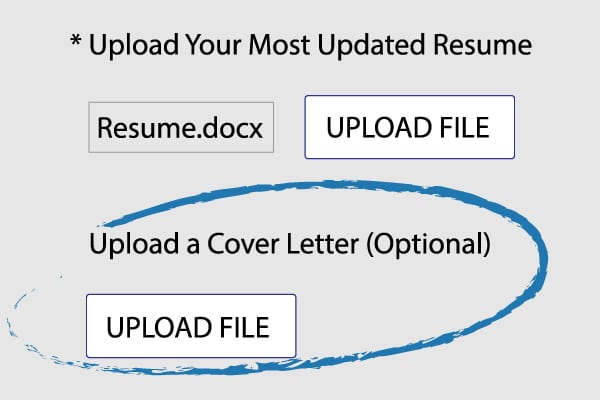
And now you’re here. So let’s dive into cover letters, why we dislike them, and CMD’s simple three-step framework for writing them.
So What is a Cover Letter?
Many professionals, especially within the STEM fields, might not know what a cover letter is and why it’s used. Essentially, a cover letter is a supplementary document geared at introducing your history, your skills, and your experience to an organization. Historically, they morphed from “Letters of Introduction” and were popular in the legal, financial, nonprofit, sales, and marketing sectors. These fields have historically had very customer-oriented, communication-heavy, and client-facing roles where soft skills dominate other industry-learned technical skills. Today, cover letters help to convey to recruiters and hiring managers that a candidate:
1. Researched their specific organization and role
2. Obtained the necessary skills and experience to accomplish the job
3. Is able to showcase the uniqueness of their career story and background
In other words, cover letters allow candidates to introduce additional information in the job search process that might not be on a résumé or job application.
So Why Do We Hate Cover Letters?
As résumés have changed, digital portfolios (personal websites, LinkedIn, job profiles) have evolved, and informational interviews have become increasingly popular. Cover letters have fallen out of style – or at least become truly “optional” in many job roles. However, when a cover letter is needed, your anxiety naturally skyrockets. The customization and differentiation from a résumé can be extremely time-consuming. It’s all too easy to forget that cover letters are NOT résumés. Their main purpose is to map your experience, values, and skills to a specific company’s values and job.
Let’s say you apply for a project manager role at two companies within similar industries and with similar responsibilities. Your résumés will probably look 90% the same, whereas the cover letter could be drastically different. Sadly, some hiring managers don’t spend enough time reviewing your cover letters – so, I wanted to share CMD’s tips to help you quickly create powerful cover letters.
So How Can You Write a Cover Letter in less than 60 Minutes?
Knowing every cover letter is different, CMD uses a simple three-step framework to help our storytellers create quick and impactful cover letters.
STEP 1: Source Your Documents
If you want to save yourself hours of drafting and editing time, then gather these four items before you start writing:
☑ Job overview/requirements
☑ Background research on the company (e.g. how they make money, company values, etc)
☑ An up-to-date version of your résumé
☑ Three key strengths you want to highlight within your cover letter
STEP 2: Produce Your 1st Draft
Your cover letter’s format does not need to be overly creative with the format of your cover letter. Answering a few specific questions in a concise (less than one page) manner is both crucial and expected. At CMD, we teach a simple five-paragraph structure that answers two questions:
1. How did you learn about this position & company?
You can mention a person currently in the company, attending an info session or career fair, reading an article (or another form of media) to show you understand the position. Setting up informational interviews (before applying) with current or past team members is the most effective and efficient way to understand a job role.
2. What can you bring to the position?
When answering this question, CMD recommends choosing three core strengths. These selling points may include technical skills (e.g. data analysis or computer programming), people-focused skills (e.g. communication, emotional intelligence, decision-making), or contextualized experience (e.g. working in similar roles, your educational background, and lived experience). Once you’ve selected your strengths, craft short stories that demonstrate how you used these skills in a relevant context.
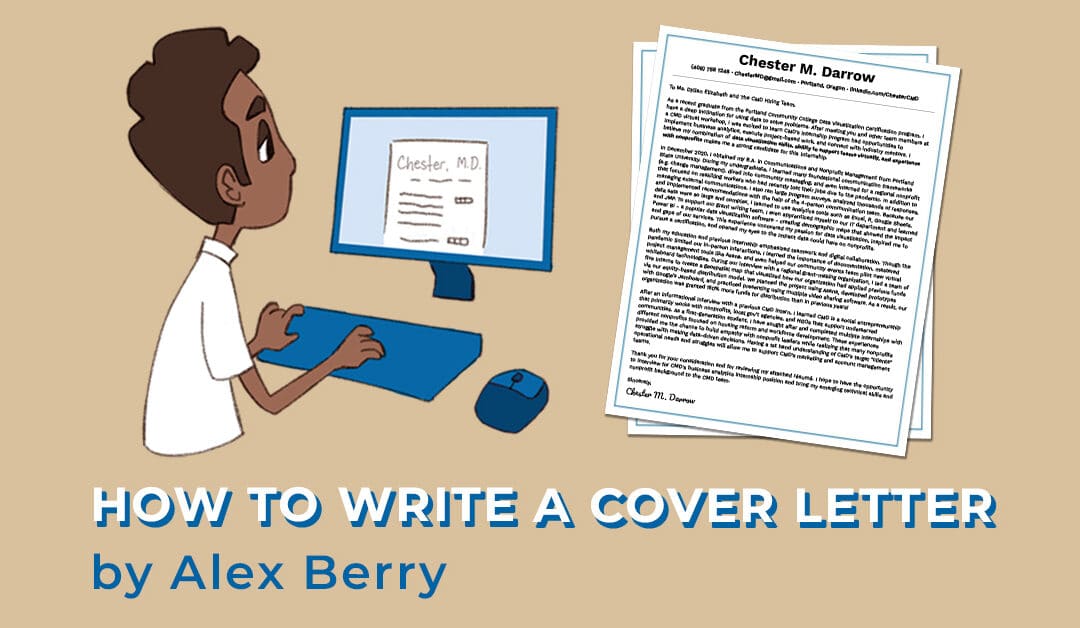
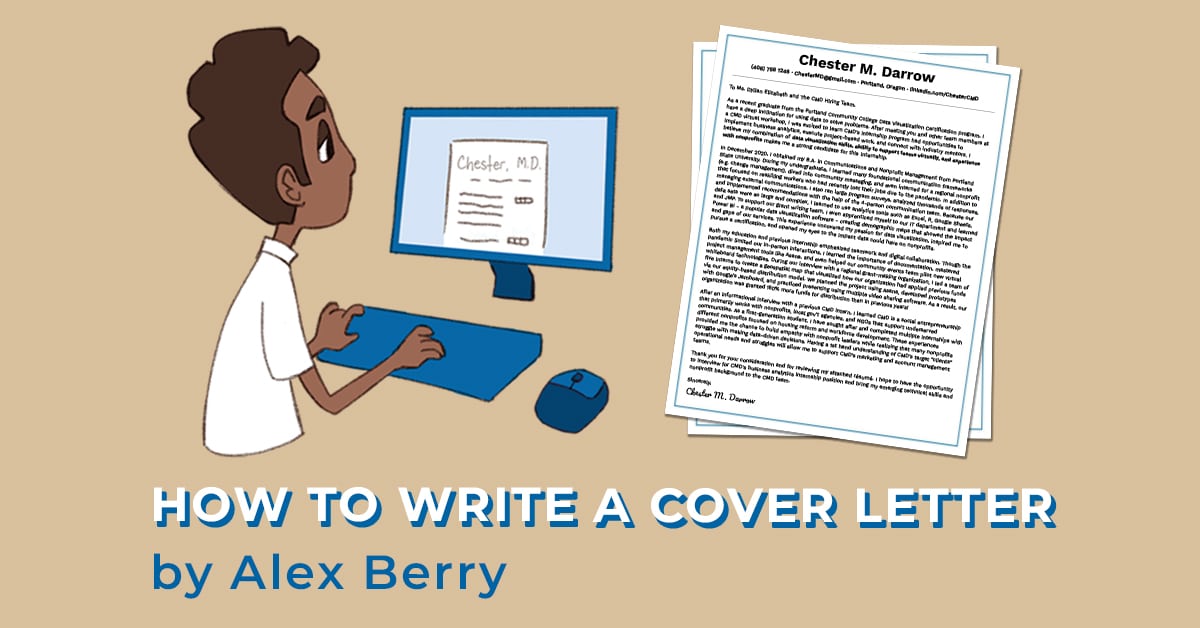
Don’t fret! There is a sample cover letter below as an example that incorporates CMD’s advice into a repeatable framework.
STEP 3: Quality Check
Once that first draft is done, send it over to a trusted colleague to review. We can go ahead and acknowledge this document won’t be perfect; however, the second pair of eyes will help catch grammar errors and advise on your story choices. While your peer reviews the cover letter draft, you can add some final additions:
☑ a personalized greeting
☑ a header that matches your résumé
☑ a date
☑ a signature
Sample Cover Letter
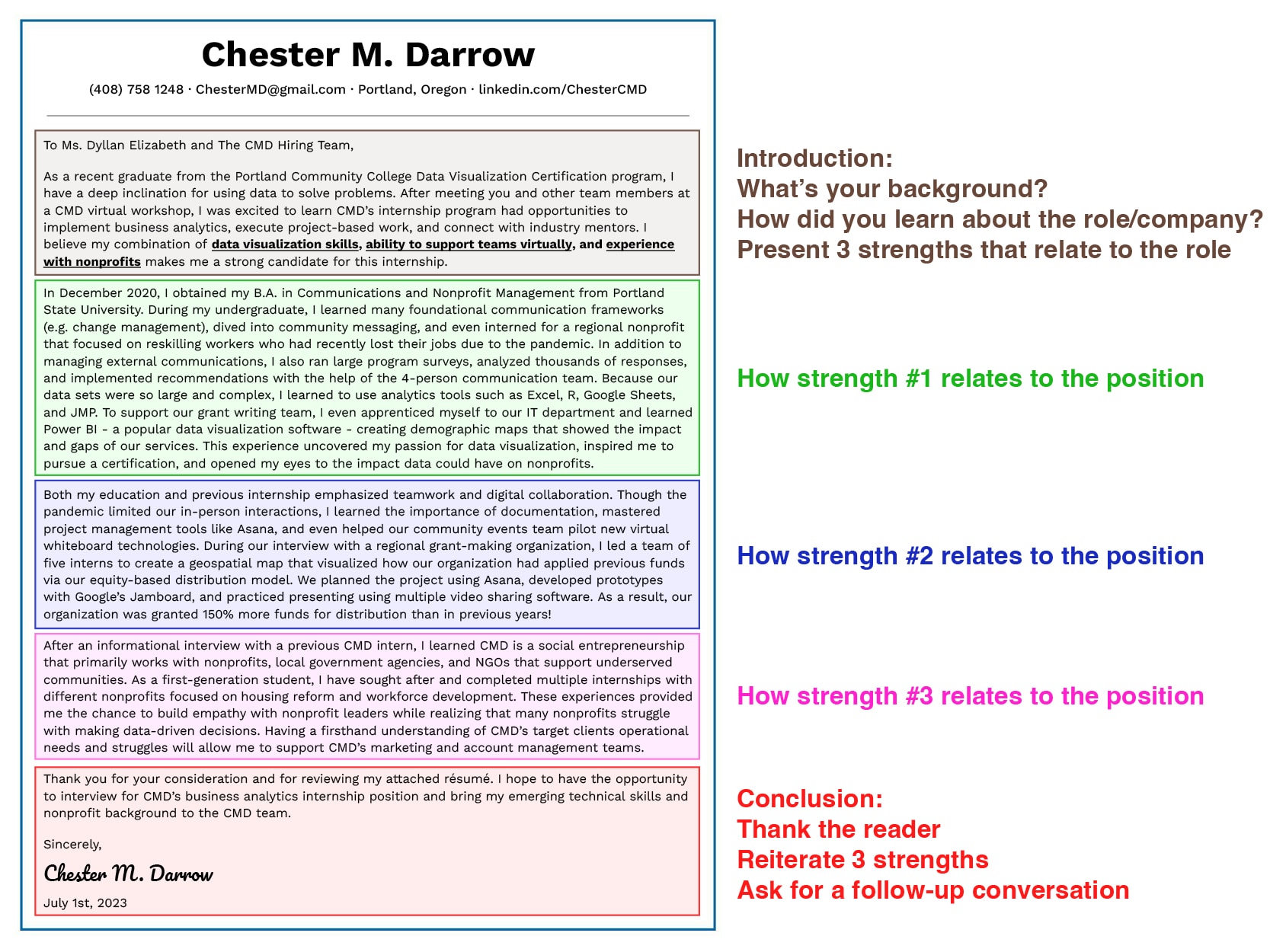
Need Cover Letter Help? Check out CMD’s (free) Cover Letter Writing ResourcE!

I hope this blog post demystifies the world of cover letters. If you’re still overwhelmed, check out our cover letter handout or grab some 1-on-1 time with a CMD career coach.

ALEX BERRY, PMP (裴维良)
He / Him / His
Founder, Career Coach, Community Facilitator
How to Write a Cover Letter in 60 Minutes
Let me guess. You’re looking for a new career, job, or internal role. After doing some research, you made it to the online job application. You manually entered in your employment history, typed up your personal information, checked the correct citizenry boxes, and even (using CMD’s resources) submitted your updated résumé.
But right before you hit submit – out of nowhere – you see the worst words in job searching history: “Optional: Upload a Cover Letter.”
And now you’re here. So let’s dive into cover letters, why we dislike them, and CMD’s simple three-step framework for writing them.
So What is a Cover Letter?
Many professionals, especially within the STEM fields, might not know what a cover letter is and why it’s used. Essentially, a cover letter is a supplementary document geared at introducing your history, your skills, and your experience to an organization. Historically, they morphed from “Letters of Introduction” and were popular in the legal, financial, nonprofit, sales, and marketing sectors. These fields have historically had very customer-oriented, communication-heavy, and client-facing roles where soft skills dominate other industry-learned technical skills. Today, cover letters help to convey to recruiters and hiring managers that a candidate:
1. Researched their specific organization and role
2. Obtained the necessary skills and experience to accomplish the job
3. Is able to showcase the uniqueness of their career story and background
In other words, cover letters allow candidates to introduce additional information in the job search process that might not be on a résumé or job application.
So Why Do We Hate Cover Letters?
As résumés have changed, digital portfolios (personal websites, LinkedIn, job profiles) have evolved, and informational interviews have become increasingly popular. Cover letters have fallen out of style – or at least become truly “optional” in many job roles. However, when a cover letter is needed, your anxiety naturally skyrockets. The customization and differentiation from a résumé can be extremely time-consuming. It’s all too easy to forget that cover letters are NOT résumés. Their main purpose is to map your experience, values, and skills to a specific company’s values and job.
Let’s say you apply for a project manager role at two companies within similar industries and with similar responsibilities. Your résumés will probably look 90% the same, whereas the cover letter could be drastically different. Sadly, some hiring managers don’t spend enough time reviewing your cover letters – so, I wanted to share CMD’s tips to help you quickly create powerful cover letters.
So How Can You Write a Cover Letter in less than 60 Minutes?
Knowing every cover letter is different, CMD uses a simple three-step framework to help our storytellers create quick and impactful cover letters.
STEP 1: Source Your Documents
If you want to save yourself hours of drafting and editing time, then gather these four items before you start writing:
☑ Job overview/requirements
☑ Background research on the company (e.g. how they make money, company values, etc)
☑ An up-to-date version of your résumé
☑ Three key strengths you want to highlight within your cover letter
STEP 2: Produce Your 1st Draft
Your cover letter’s format does not need to be overly creative with the format of your cover letter. Answering a few specific questions in a concise (less than one page) manner is both crucial and expected. At CMD, we teach a simple five-paragraph structure that answers two questions:
1. How did you learn about this position & company?
You can mention a person currently in the company, attending an info session or career fair, reading an article (or another form of media) to show you understand the position. Setting up informational interviews (before applying) with current or past team members is the most effective and efficient way to understand a job role.
2. What can you bring to the position?
When answering this question, CMD recommends choosing three core strengths. These selling points may include technical skills (e.g. data analysis or computer programming), people-focused skills (e.g. communication, emotional intelligence, decision-making), or contextualized experience (e.g. working in similar roles, your educational background, and lived experience). Once you’ve selected your strengths, craft short stories that demonstrate how you used these skills in a relevant context.
Don’t fret! There is a sample cover letter below as an example that incorporates CMD’s advice into a repeatable framework.
STEP 3: Quality Check
Once that first draft is done, send it over to a trusted colleague to review. We can go ahead and acknowledge this document won’t be perfect; however, the second pair of eyes will help catch grammar errors and advise on your story choices. While your peer reviews the cover letter draft, you can add some final additions:
☑ a personalized greeting
☑ a header that matches your résumé
☑ a date
☑ a signature
SAMPLE COVER LETTER

I hope this blog post demystifies the world of cover letters. If you’re still overwhelmed, check out our cover letter handout or grab some 1-on-1 time with a CMD career coach.
ALEX BERRY, PMP (裴维良)
He / Him / His
Founder, Career Coach, Community Facilitator
Recent Posts
How to Write a Cover Letter in 60 Minutes
read more

Accelerating Technical Growth Through Yoga
For me, yoga is an outlet through which I can practice patience, gain perspective, and connect with other people. Engineering is the outlet through which I get to use my brain to solve difficult challenges in creative ways; the combination of these two passions of mine has helped me grow immensely.

The Future of Women in Supply Chain: Closing the Gender Gap
As a woman of color who has chosen to pursue a career in supply chain, I firmly believe we have what it takes to close the gender gap. It is on us − as a global community − to expose STEM to female students at an early age, mentor and sponsor women throughout their career trajectory, and promote inclusive supply chain leadership on the factory floors and in the C-suite.